Indoor Cat Enrichment: DIY Toys, Play Routines & Home Tips
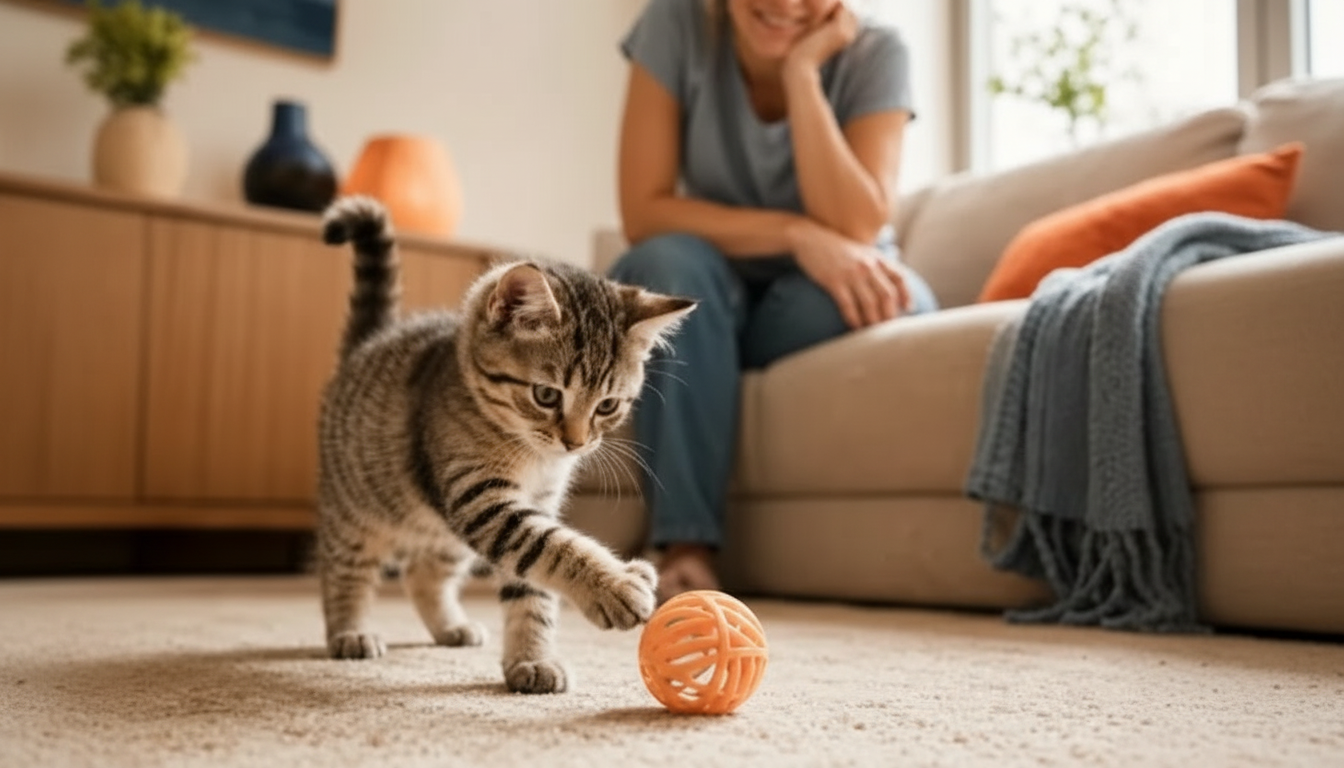
Enrichment Ideas for Indoor Cats: DIY Toys, Play Routines, and Cat-Friendly Home Tips
Indoor cats can thrive when their daily life includes chances to hunt, climb, scratch, explore, and rest in ways that match natural feline instincts. A good enrichment plan reduces boredom-related behaviors (like night zoomies, overgrooming, or furniture scratching) and supports healthy weight, confidence, and bonding. Below are practical, low-cost ideas plus a simple routine that works for most homes, along with a printable guide option for easy follow-through.
What “enrichment” means for an indoor cat
Cat enrichment is less about constant entertainment and more about meeting core feline needs in small, repeatable ways.
- Hunting and foraging: short bursts of stalking, chasing, pouncing, and “capturing” food or toys.
- Climbing and surveying: vertical space to perch, observe, and feel secure.
- Scratching and scent marking: dedicated surfaces to stretch, shed nail sheaths, and communicate comfort.
- Exploration and novelty: safe rotation of toys, scents, and small layout changes to prevent habituation.
- Choice and control: multiple routes, hiding spots, and cozy stations so the cat can opt in or opt out.
- Calm recovery: predictable quiet zones and naps after play; enrichment isn’t nonstop stimulation.
For a deeper look at feline environmental needs, guidance from International Cat Care (iCatCare) and general care basics from the American Veterinary Medical Association (AVMA) are helpful references.
Signs an indoor cat may need more stimulation
Many “naughty” behaviors are really a cat trying to create opportunities to stalk, chase, and problem-solve.
- High-energy bursts at night, attention-seeking meowing, or restlessness after meals.
- Destructive scratching, chewing plastic, or knocking items off surfaces to create “movement.”
- Overgrooming, mild aggression during petting, or play that escalates to biting.
- Boredom eating, rapid weight gain, or constant begging between meals.
- Hiding more than usual or seeming jumpy—lack of confidence can improve with predictable play and safe spaces.
- Rule-out note: sudden behavior changes can signal illness; consider a veterinary check if changes are new or intense.
A simple daily play routine that fits most schedules
Most cats prefer short sessions spread across the day. Think “snack-sized” play that ends with a reward so the hunt feels complete.
- Aim for 2–3 short sessions instead of one long one: many cats prefer 5–10 minutes at a time.
- Use a “hunt sequence”: stalk (slow movement), chase (quick movement), pounce/catch (toy stops), then reward (treat or meal).
- Morning: 5 minutes of wand play + small breakfast in a puzzle feeder.
- Evening: 10 minutes of higher-intensity play + main meal; this often reduces nighttime zoomies.
- Late evening (optional): 3–5 minutes of calmer play (kick toy, slow string) + a few treats to settle.
- Rotate play styles across the week: aerial prey (wand), ground skittering (mice), and “ambush” games (peek-and-pounce).
Quick enrichment schedule (mix-and-match)
| Time | Activity | Goal | Low-cost option |
|---|---|---|---|
| Morning | 5–7 min wand play + puzzle breakfast | Energy outlet + foraging | Paper egg carton feeder |
| Midday | Window time + 2-min training | Mental stimulation + confidence | Target touch using a spoon |
| Evening | 8–12 min chase-and-pounce + meal | Hunt cycle completion | DIY “mouse” from rolled sock |
| Night | Scent game + calm treat scatter | Decompression + sniffing | Cat-safe dried herbs in a sock |
DIY toys and games using items already at home
Homemade enrichment works best when it’s safe, supervised at first, and rotated so it stays interesting.
- Treat scatter hunt: toss a few pieces of kibble into a hallway or around a room so sniffing replaces begging.
- Paper bag exploration (handles removed): place a crinkle ball or a pinch of catnip inside and let the cat investigate.
- Box “pounce tunnel”: cut 2–3 paw-sized holes in a cardboard box; move a toy inside for “mystery prey.”
- Toilet-paper roll puzzle: fold one end, add a few kibbles, fold the other end; start easy and increase difficulty slowly.
- Sock kicker: stuff a sock with fabric scraps, tie off, and supervise at first to confirm durability.
- Feather-free teaser alternative: ribbon or fleece strip on a string; avoid loose threads and store after play to prevent chewing.
Foraging and feeding enrichment (without overfeeding)
Food enrichment should use the same daily calories—just delivered in a way that lets your cat “earn” them.
- Split meals into smaller portions to create more “hunt opportunities” across the day.
- Use part of the daily ration for games: every pounce can earn 1–2 kibbles or a lickable treat.
- Puzzle progression: start with easy access, then gradually make it harder as frustration-free success builds motivation.
- “Hunt the bowl” method: move the food dish to different safe spots each day (floor level first, then slightly elevated).
- Water enrichment: a fresh bowl away from food, plus a second bowl in a quiet area; some cats prefer fountains.
- If weight is a concern, measure portions and use low-calorie treats; consult a veterinarian for a weight plan.
Cat-friendly home setup: vertical space, scratching, and quiet zones
A few strategic home tweaks can do more than a closet full of toys, especially for cats that startle easily or share space with other pets.
Enrichment for different personalities and ages
Printable routine support and easy tracking
If you want a ready-to-use layout, try the Printable cat enrichment guide with DIY toys, play routines, and home tips for simple daily follow-through.
For households that like structured habit tracking, the The Ultimate Productivity Blueprint | Digital Productivity Guide for Goal Setting, Time Management & Daily Routines can also help you stick to short play sessions, rotation days, and feeding puzzles without relying on memory.
FAQ
How to enrich a bored indoor cat?
Use short daily play sessions that mimic hunting (stalk → chase → pounce → treat), add foraging with puzzle feeders or treat scatters, increase vertical space and scratching options, rotate toys weekly, and provide safe window perches and quiet resting zones. If boredom behaviors are sudden or severe, schedule a veterinary check to rule out medical causes.











Leave a comment