Indoor Cat Boredom: Easy Enrichment Ideas That Work
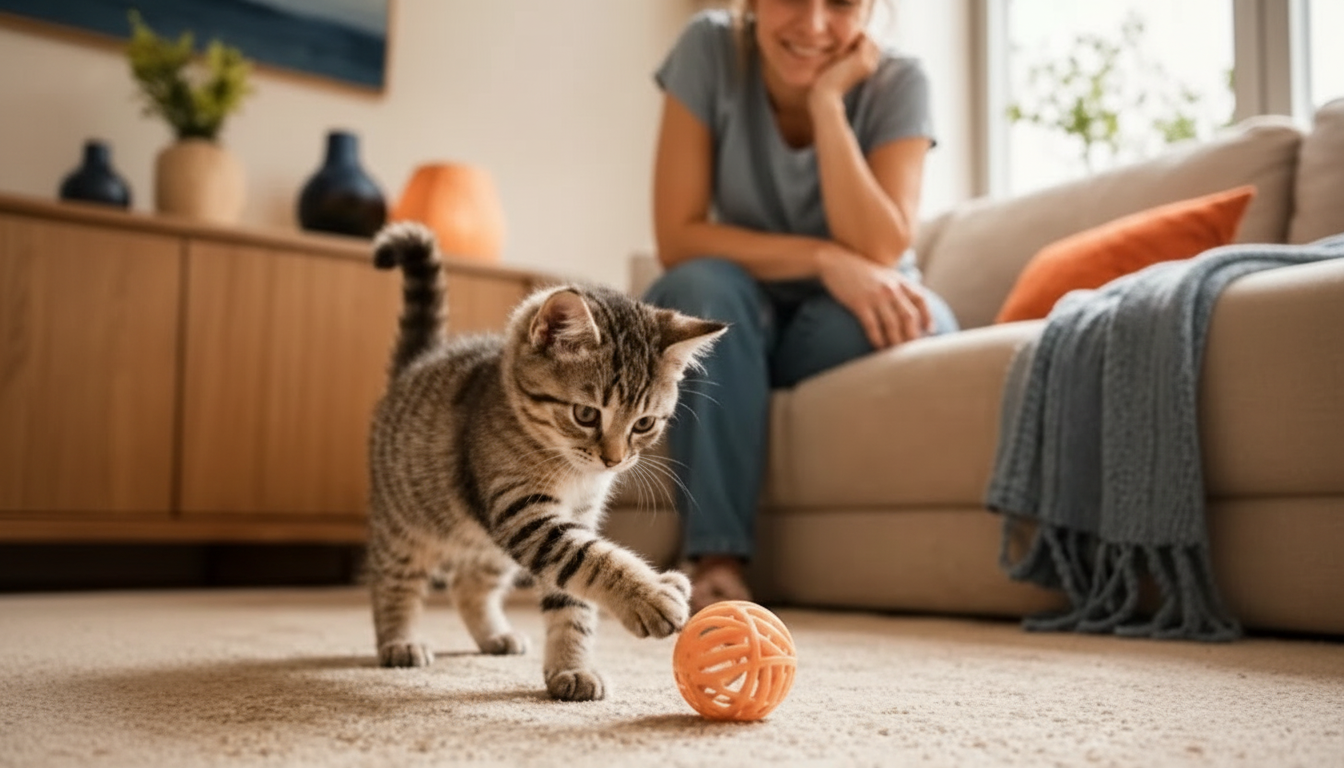
How to enrich a bored indoor cat?
Answer
A bored indoor cat usually needs two things: chances to “hunt” and chances to explore. Start by turning daily life into a predictable mix of play, puzzles, climbing, and novelty—without overwhelming your cat. A few small changes can make a big difference in mood, energy, and unwanted behaviors like yelling, swatting, or getting into cabinets.
Build a simple play routine: Aim for two short play sessions a day (5–10 minutes each). Use wand toys to mimic prey: keep the “bug” low, let it hide behind furniture, and end with a catch. Finish by offering a small treat or a portion of a meal so the hunt feels complete.
Make meals work for your cat: Instead of serving everything in a bowl, rotate in puzzle feeders, treat balls, or a DIY “foraging tray” (a shallow box with paper balls or safe fabric strips hiding kibble). Start easy, then increase difficulty as your cat learns the game.
Add vertical territory: Cats feel secure and stimulated when they can climb and perch. Provide at least one tall cat tree, a window perch, or sturdy shelves. Place a cozy bed near a window for bird-watching, and consider putting a scratcher nearby to encourage healthy stretching and scent-marking.
Offer safe novelty: Rotate toys weekly so they stay interesting. Add a paper bag (handles removed), a cardboard box “fort,” or a new texture mat. Catnip, silvervine, or valerian can spark interest—test one at a time and store it away between sessions.
Use low-effort enrichment: Turn on a “cat TV” window view, play nature sounds at low volume, or do a two-minute clicker training session (sit, touch, or go-to-mat). Training builds confidence and gives your cat a job to do.
For more DIY ideas, room-by-room tips, and playful routines, see the full guide: Indoor cat enrichment ideas and play routines.
FAQ
How do I know if my indoor cat is understimulated?
Common signs include frequent meowing for attention, destructive scratching, nighttime zoomies, over-grooming, or “ambush” biting. If these behaviors improve with structured play and foraging, boredom was likely a major factor.











Leave a comment